
A Simple Mehndi Design can make your hands look elegant without requiring complicated patterns, hours of application, or professional-level skills. Whether you are preparing for Eid, a wedding, a family celebration, a festival, or simply want attractive mehndi for a casual day, simple patterns are a wonderful choice. They can be delicate and minimal, or slightly more detailed while still remaining easy to create. From tiny floral motifs and leafy trails to neat finger patterns and elegant Arabic-inspired designs, there are countless ways to keep mehndi beautiful yet uncomplicated.
Why Simple Mehndi Design Is So Popular
The popularity of simple mehndi comes from its balance of beauty and convenience. Not everyone wants a full-hand design covered with dense patterns. Sometimes, a small floral arrangement on the palm or a graceful trail running toward the wrist can create a much more refined appearance. Simple designs are also suitable for beginners because they generally use basic shapes that are easier to control. With a little practice, even someone holding a mehndi cone for the first time can create attractive results.
| Design Type | Difficulty | Best For | Approx. Application Time |
|---|---|---|---|
| Floral Mehndi | Easy | Casual occasions | 10–20 minutes |
| Arabic Mehndi | Easy to Moderate | Eid & parties | 20–30 minutes |
| Minimal Mehndi | Very Easy | Daily wear | 5–15 minutes |
| Finger Mehndi | Easy | Stylish occasions | 10–20 minutes |
| Bracelet Style | Moderate | Weddings & festivals | 20–35 minutes |
| Back Hand Design | Easy | Parties & celebrations | 15–25 minutes |
Simple Mehndi Design Ideas for Beginners
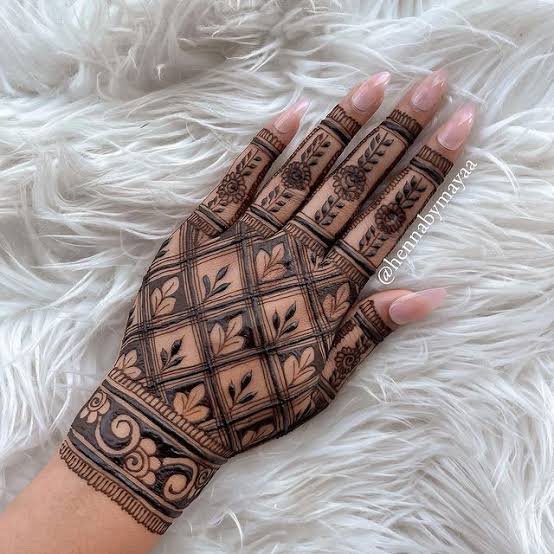
Beginners should start with patterns that do not require extremely fine lines or complicated symmetry. Flowers are one of the easiest motifs because they can be created using curved petals around a small center. Leaves are another excellent choice. A few leaves connected by a curved stem can instantly transform an empty area of the hand into an elegant pattern.
Dots, small circles, spirals, vines, and teardrop shapes can also be combined to create attractive designs. Instead of trying to fill the entire palm, leave some natural skin visible between the motifs. This negative space makes the design appear cleaner and gives your hands a modern appearance.
Easy Floral Mehndi Design
Floral patterns have remained popular for generations because they work beautifully with almost every style. A single large flower in the center of the palm can create a charming focal point. Around it, you can add small leaves, curved stems, tiny dots, and miniature flowers.
For a more contemporary style, avoid filling every section around the flower. Let a few spaces remain empty. This creates contrast and prevents the pattern from appearing crowded. A beginner can also draw three or four small flowers along the side of the hand rather than attempting a large composition.
Simple Arabic Mehndi Design
Arabic mehndi is particularly suitable for people who prefer flowing patterns. Instead of covering the hand completely, Arabic-inspired designs usually feature bold floral shapes, leafy vines, curved trails, and plenty of open space.
A simple Arabic pattern can begin near the wrist and move diagonally toward the index finger. You can create a large flower along the main trail and surround it with pointed leaves. Add a few small dots beside the vine to finish the design. The result is stylish without being excessively complicated.
Simple Mehndi Design for Front Hand
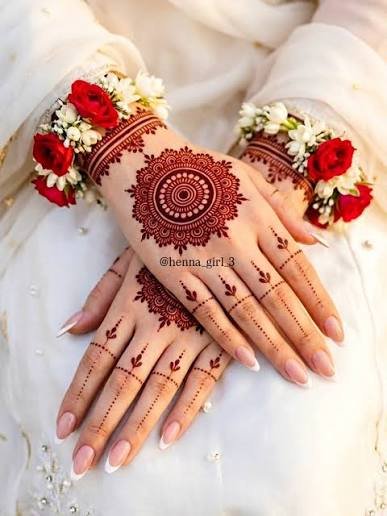
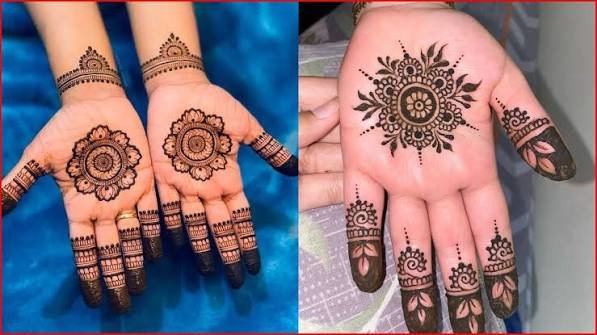
The front hand provides plenty of space for creative patterns. However, beginners do not need to fill the entire palm. A central motif surrounded by delicate details can be enough.
One popular approach is to create a small mandala in the center. Add petals around it, followed by curved lines and dots. From the bottom of the mandala, extend a thin leafy vine toward the wrist. You can decorate the fingers with tiny lines, dots, or half-flower motifs.
Another option is a diagonal design. Start from one corner of the palm and create a floral vine that moves toward the opposite side. This style creates a sense of movement and makes the hand appear longer.
Simple Mehndi Design for Back Hand
The back of the hand is ideal for delicate and stylish mehndi. A central flower with thin leaves extending toward the fingers can look particularly graceful. You can also create a bracelet-style pattern around the wrist and connect it to a small floral trail.
For an even simpler appearance, place a flower between the thumb and index finger and extend a few leaves toward the wrist. Add tiny dots around the main pattern. It is quick, neat, and suitable for almost any celebration.
The back-hand design is also easier to photograph because the pattern remains visible from different angles. This makes it a popular choice for social events, festive outfits, and mehndi-inspired photos.
Minimal Simple Mehndi Design
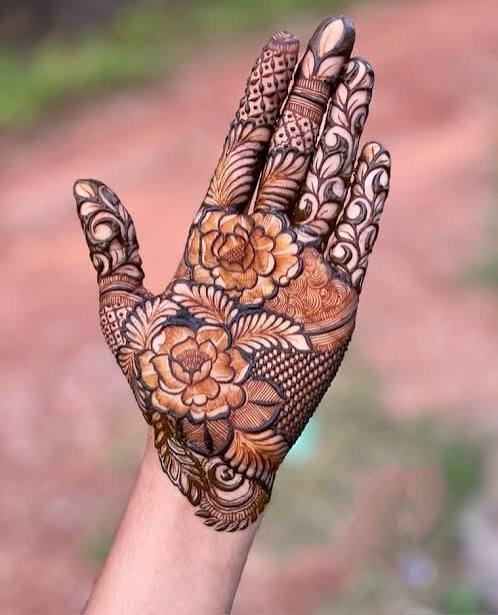
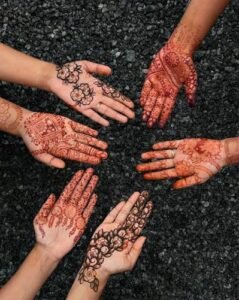
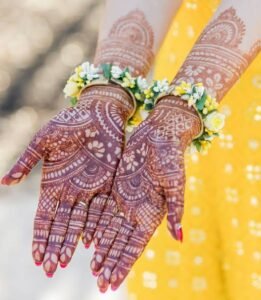
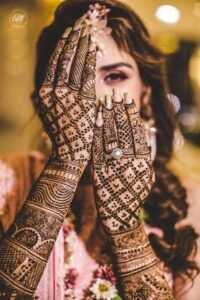
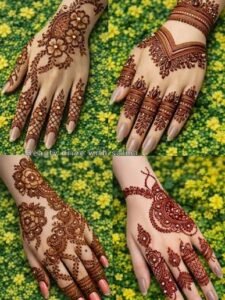
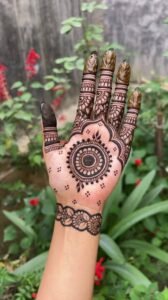
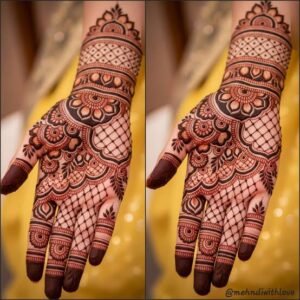
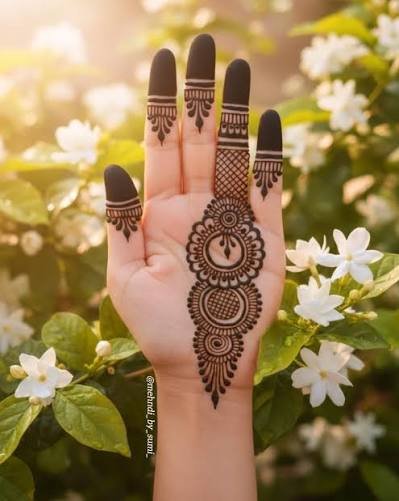
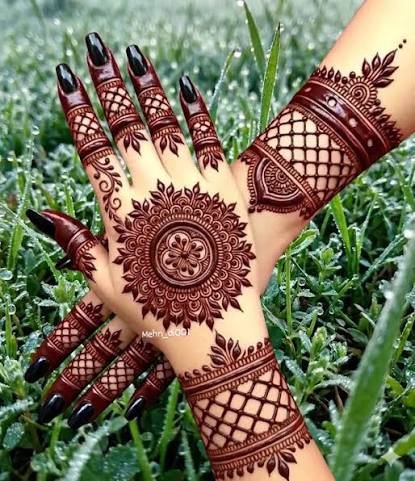
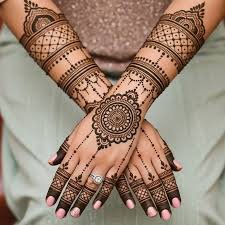
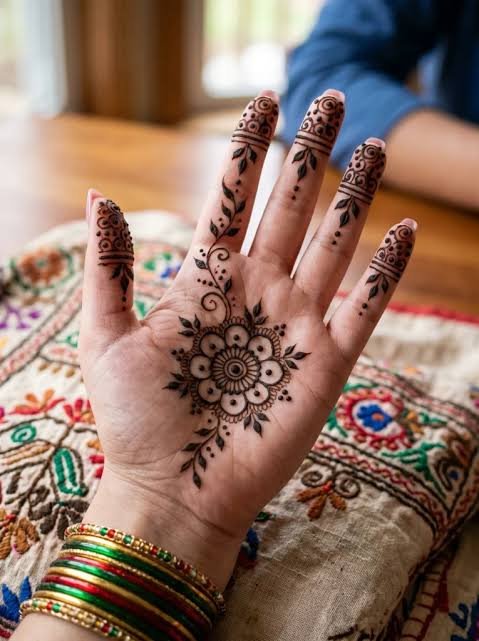
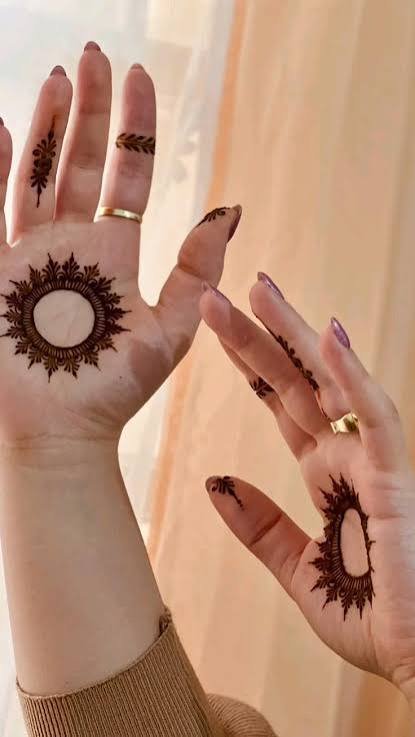
Minimal mehndi is perfect for people who like clean, fashionable patterns. Instead of a dense palm design, minimal mehndi focuses on a few carefully placed elements.
A tiny flower near the wrist, three leaves beside the thumb, a delicate ring-like pattern around one finger, or a short vine across the back of the hand can all work beautifully. You can even decorate only the fingertips and leave the rest of the hand completely empty.
Minimal designs are especially practical when you have limited time. They can also complement outfits where you want the clothing, jewelry, or accessories to remain the main focus.
Simple Finger Mehndi Design
Finger mehndi can be incredibly stylish despite requiring very little time. You can decorate each finger with different combinations of dots, lines, leaves, and small geometric shapes.
One easy method is to cover only the middle section of each finger. Another is to create a small design around the ring finger while keeping the remaining fingers lightly decorated.
For a modern appearance, try using thin vertical lines with tiny dots on either side. If you prefer a traditional style, small floral petals and curved bands are excellent choices.
Simple Mehndi Design for Eid
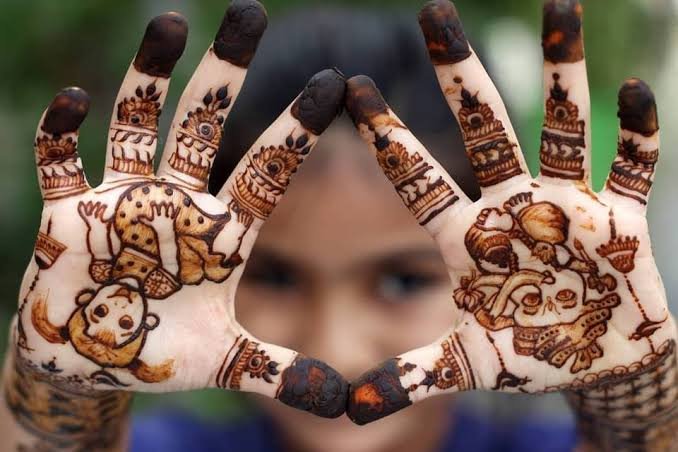
Eid is one of the occasions when many people want beautiful mehndi without spending an entire afternoon getting their hands decorated. A simple design works perfectly because it can be completed quickly while still giving a festive appearance.
For Eid, floral vines, crescent-inspired motifs, leafy trails, mandala patterns, and Arabic-style compositions are excellent options. You can apply a medium-sized design to the front hand and a smaller matching pattern to the back hand.
If you are applying mehndi at home, choose a design that matches your outfit. A delicate pattern works well with heavily embroidered clothing, while a slightly bolder design can complement a simpler outfit.
Simple Mehndi Design for Weddings
Wedding mehndi can be elaborate, but simple patterns have their own charm. They are especially useful for wedding guests, bridesmaids, family members, or anyone who prefers a less crowded appearance.
A simple wedding design can include flowers, vines, paisley shapes, leaves, and small mandalas. You can make the design look richer by adding fine dots and curved borders rather than covering every area with henna.
For a coordinated appearance, repeat one main motif throughout the design. For example, if you begin with a large floral pattern, use smaller versions of the same flower near the fingers and wrist.
Modern Simple Mehndi Design
Modern mehndi often combines traditional motifs with clean layouts. Instead of symmetrical full-hand patterns, contemporary designs may use isolated flowers, geometric lines, abstract curves, tiny stars, or unusual spacing.
One attractive style is to create a thin vine across the back of the hand with three flowers placed at different points. Another option is a circular motif near the center of the palm with thin lines extending outward.
Modern designs are especially appealing to people who want mehndi that feels fashionable rather than heavily traditional.
| Occasion | Recommended Style | Main Motifs | Ideal Placement |
|---|---|---|---|
| Eid | Floral & Arabic | Flowers, leaves, vines | Front or back hand |
| Wedding | Elegant Floral | Paisley, flowers, leaves | Full or half hand |
| Party | Modern Minimal | Lines, dots, flowers | Back hand |
| Festival | Traditional Simple | Mandala, petals, vines | Palm |
| Casual Day | Minimal | Tiny flowers, leaves | Fingers & wrist |
| Family Event | Arabic Style | Floral trails | Back hand |
Simple Mehndi Design with Flowers and Leaves
Flowers and leaves are perhaps the most versatile combination for mehndi. They can be arranged in dozens of different ways without making the design difficult.
Start by drawing one medium-sized flower. Connect it to a curved stem. Add leaves on alternating sides of the stem, making some leaves larger than others. You can then add tiny dots around the flowers.
Do not worry about making every leaf identical. Natural variation can actually make the design appear more organic. A slightly uneven arrangement often looks more handmade and charming than a perfectly repetitive pattern.
Simple Mandala Mehndi Design
Mandala designs are based on circular patterns and are surprisingly easy to simplify. Begin with a small circle and surround it with petals. Add another layer of petals or curved lines around the first layer.
You can stop there for an extremely minimal design, or continue adding small dots, arches, and lines for more detail. A small mandala in the center of the palm looks balanced and works well for both traditional and modern occasions.
For beginners, it is better to create a smaller mandala rather than attempting a huge one. Smaller patterns are easier to keep symmetrical and usually require less time.
Simple Mehndi Design for Kids
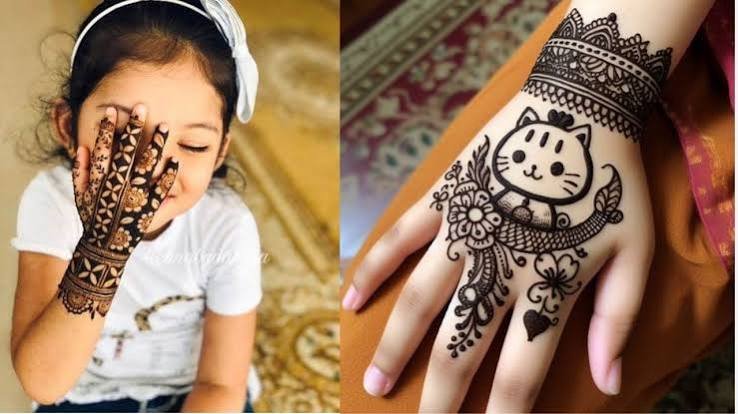
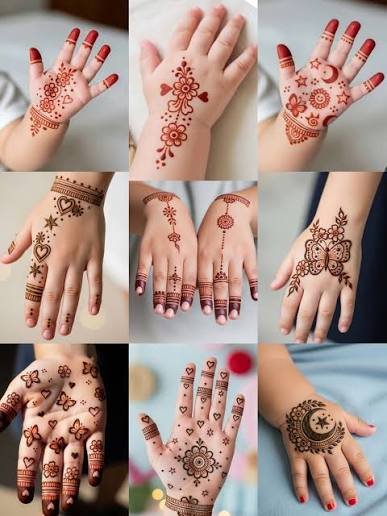
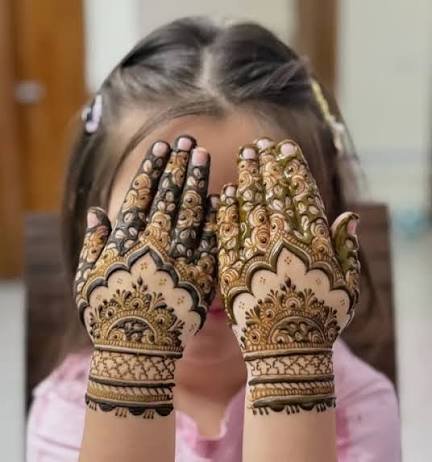
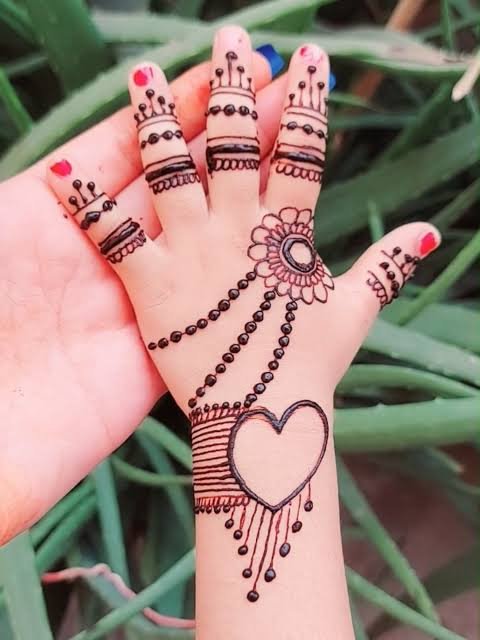
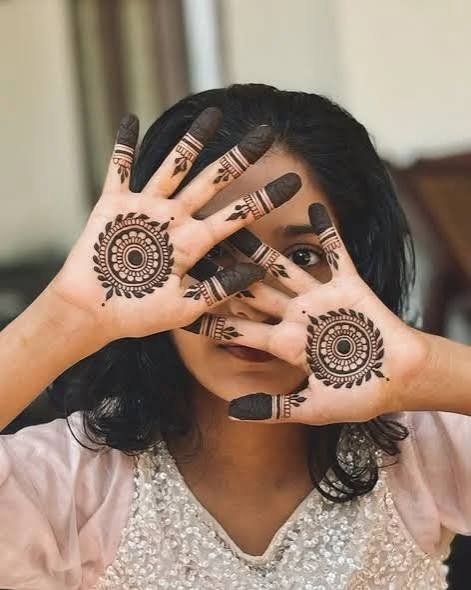
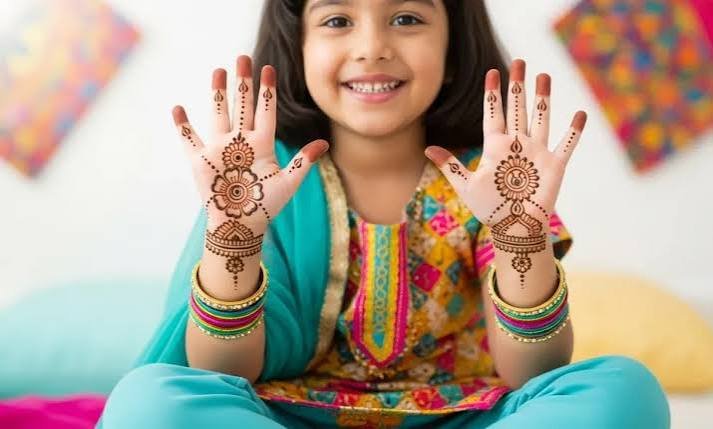
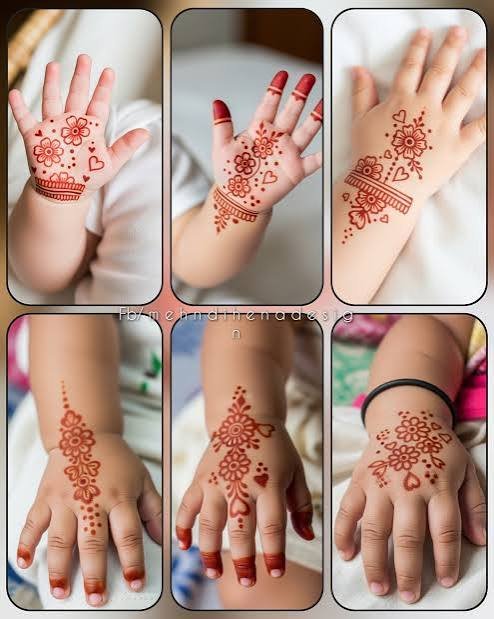
Children often prefer small, cute designs that can be completed quickly. Large patterns may feel uncomfortable or take too long, so small flowers, hearts, stars, butterflies, leaves, and tiny vines are good options.
A simple flower on the palm, a small bracelet around the wrist, or a few decorated fingertips can look adorable. You can also create a tiny trail that starts at the wrist and ends near one finger.
When creating designs for children, keeping the pattern uncomplicated makes the application process more enjoyable.
How to Make Simple Mehndi Look More Beautiful
A simple design does not have to appear plain. The difference often comes from spacing, line quality, and placement.
Use a consistent cone pressure so that your lines remain relatively even. Combine thick outlines with thinner decorative lines to create visual contrast. Add small dots around larger motifs instead of filling empty spaces completely.
Spacing is equally important. If every section is packed with patterns, the design can lose its elegance. Empty areas act as visual breathing room and make the main motifs stand out.
Another useful technique is repetition. If you use one particular leaf shape or flower style, repeat it two or three times. This creates harmony throughout the design.
Tips for Applying Simple Mehndi at Home
Before applying mehndi, make sure your hands are clean and free from heavy oils or lotions. Oily skin can interfere with the application and may make the paste harder to control.
Practice a few basic lines on paper first. Try straight lines, curves, dots, spirals, leaves, and simple flowers. Even five minutes of practice can improve your control.
Keep your mehndi cone comfortable in your hand. Do not squeeze too hard. Gentle, consistent pressure usually gives you better control over the thickness of the lines.
After applying the design, allow the mehndi to dry naturally. Avoid rubbing or washing the area immediately. The final stain develops over time, and proper aftercare can help you get a richer result.
Common Mistakes to Avoid
One common mistake is trying to copy an extremely complicated design before developing basic cone control. Start with simple patterns and gradually increase the level of detail.
Another mistake is applying too much pressure to the cone. This can produce thick, uneven lines and make small patterns difficult to create.
Avoid placing too many motifs close together. A design can become visually confusing when flowers, leaves, dots, and geometric elements are all packed into one small space.
Finally, do not judge the final stain immediately after removing dried mehndi. The color can continue developing afterward, so give it time before deciding how dark or successful the result is.
Simple Mehndi Design Trends
Current mehndi preferences include a strong mix of traditional and contemporary styles. Many people are choosing half-hand designs, delicate finger decorations, bracelet patterns, floral trails, and asymmetrical layouts.
Another popular approach is combining bold main motifs with very thin detailing. This creates contrast and gives the design a polished appearance without making it excessively dense.
Personalization is also becoming more common. Instead of copying a complete design exactly, people often take inspiration from several patterns and combine their favorite elements into one unique arrangement.
How to Choose the Right Simple Mehndi Design
Consider the occasion first. A tiny minimalist pattern may be perfect for everyday wear, while a slightly fuller floral or Arabic design may work better for Eid or a wedding.
Think about how much time you have. If you only have ten minutes, choose fingers, a small flower, or a short vine. If you have thirty minutes, you can create a more detailed half-hand composition.
Your outfit can also influence the design. Heavy clothing often pairs well with simple mehndi, while a plain outfit can be complemented by a slightly more decorative pattern.
Most importantly, choose something you feel comfortable wearing. Mehndi is decorative art, and there is no requirement to follow one particular style.
Benefits of Choosing a Simple Mehndi Design
Simple mehndi has several practical advantages. It generally takes less time to apply, requires fewer complicated elements, and is easier for beginners to recreate. It can also be modified easily.
If you make a small mistake in a minimal design, it is often easier to adjust the surrounding pattern. With a dense design, correcting one mistake can become much more difficult.
Simple patterns are also versatile. The same floral vine can be adapted for Eid, weddings, parties, festivals, or casual occasions simply by changing its size and placement.
Aslo More
Motivational Status – Best Motivational Status for WhatsApp, Facebook & Instagram
Good Morning Images – Beautiful, Fresh & Inspirational Morning Pictures
Final Thoughts on Simple Mehndi Design
A Simple Mehndi Design proves that beautiful henna art does not need to be complicated. A few flowers, graceful leaves, delicate dots, curved vines, or a small mandala can transform the appearance of your hands while keeping the application quick and manageable.
For beginners, simple designs provide the perfect starting point. Practice basic shapes first, pay attention to spacing, and gradually experiment with different arrangements. Once your cone control improves, you can combine several basic motifs to create designs that feel completely your own.
Whether you prefer traditional patterns, Arabic trails, minimal finger art, modern geometric details, or delicate floral compositions, there is a simple mehndi style for almost every occasion. The best design is ultimately one that feels comfortable, suits the event, and reflects your personal taste.