
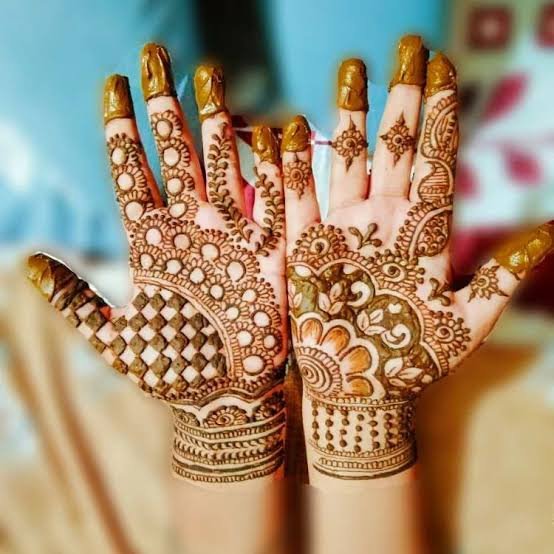
Simple Less Mehendi Designs are perfect for anyone who loves the beauty of mehendi but prefers a clean, delicate, and less crowded appearance. Unlike heavy bridal patterns that cover almost the entire hand, these designs use fewer elements while still creating an elegant finish. Small flowers, thin vines, leaves, dots, graceful curves, and decorated fingertips can make a surprisingly beautiful design without requiring hours of application.
For beginners, less-detailed mehendi is also much easier to manage. You can practice basic shapes and gradually combine them into attractive patterns. Whether you need a quick design for Eid, a wedding, a party, a festival, or an ordinary day, a minimal pattern can suit almost any occasion.
| Design Style | Difficulty | Best Occasion | Approx. Time |
|---|---|---|---|
| Tiny Floral | Easy | Casual & Eid | 10–15 minutes |
| Leafy Vine | Easy | Parties | 10–20 minutes |
| Finger Design | Very Easy | Daily Wear | 5–15 minutes |
| Minimal Arabic | Easy | Eid & Weddings | 15–25 minutes |
| Wrist Design | Easy | Casual Events | 10–15 minutes |
| Small Mandala | Moderate | Festivals | 15–20 minutes |
What Are Simple Less Mehendi Designs?
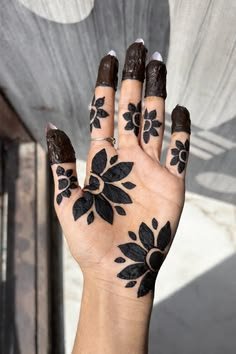
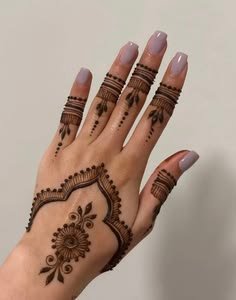
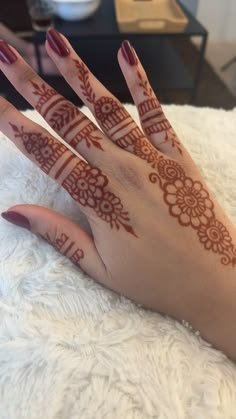
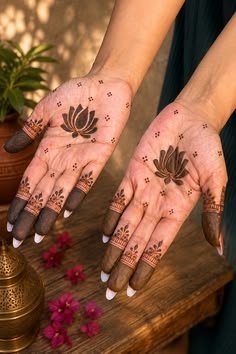
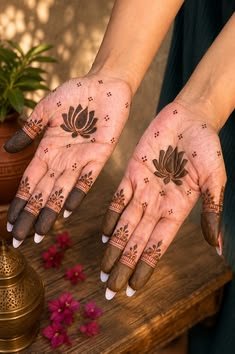
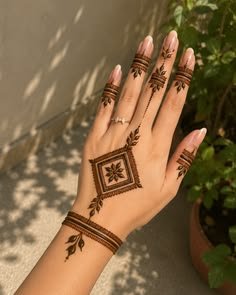
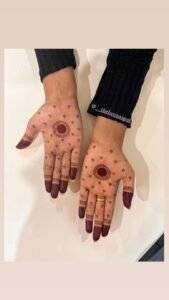
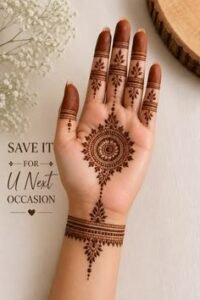
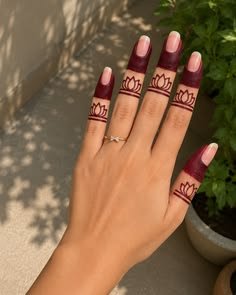
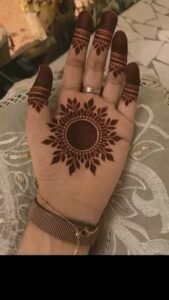
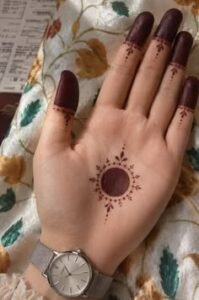
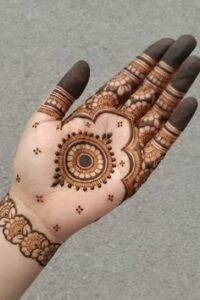
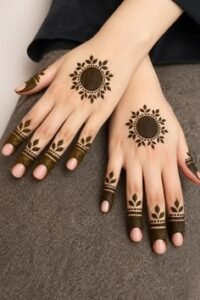
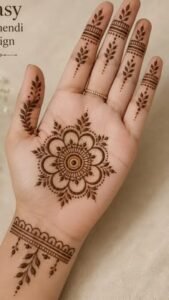
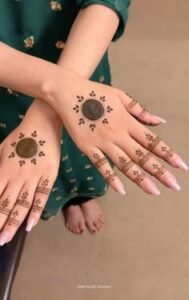
Simple Less Mehendi Designs focus on using fewer patterns and leaving more natural skin visible. Instead of filling every part of the palm, these styles place the artwork strategically. The result is light, sophisticated, and comfortable.
A small flower in the center of the hand, a curved leafy branch running toward the fingers, or a few decorated fingertips can be enough to create an attractive appearance. The beauty comes from placement rather than the number of elements.
This style is particularly useful for people who do not have much time. You can create a lovely pattern in fifteen or twenty minutes instead of spending several hours on a heavily detailed design.
Why Choose Simple Less Mehendi Designs?
There are several reasons why minimal mehendi continues to be popular. First, it is quick. If you have an event coming up and only a short amount of time available, a lighter design is an excellent choice.
Second, these patterns are beginner-friendly. Complicated bridal designs often require excellent cone control and considerable practice. Simple designs rely on basic lines, dots, curves, flowers, and leaves.
Third, minimal mehendi works with almost every outfit. It does not compete with jewelry or heavily decorated clothing. Instead, it adds a subtle decorative touch to your overall appearance.
Finally, less mehendi can look very modern. Clean spacing and delicate lines give traditional henna art a contemporary feel.
Simple Less Mehendi Designs for Beginners
Beginners should start with motifs that are easy to repeat. Leaves are an excellent starting point because they can be created using two curved lines. Flowers are another useful option. Even a simple five-petal flower can become the central element of a beautiful pattern.
Try practicing these basic shapes:
- Small flowers
- Pointed leaves
- Curved vines
- Dots
- Spirals
- Teardrop shapes
- Simple petals
- Thin borders
Once you are comfortable with these shapes, combine two or three of them. There is no need to use everything in one design.
Minimal Floral Mehendi Design
Flowers are among the most versatile elements in mehendi art. A single flower can act as the focal point of the entire hand.
For a less-detailed style, draw one medium-sized flower near the center or side of the palm. Add a thin stem and two or three leaves. Finish with a few dots around the flower.
You can make the design even lighter by placing the flower toward the wrist and allowing the vine to extend upward. This creates a natural flow without covering the palm.
Another beautiful option is to place three tiny flowers diagonally across the back of the hand. Connect them with a thin vine and add small leaves between them.
Simple Less Mehendi Designs for Front Hand
The front hand offers many possibilities even when you want minimal coverage. A small central mandala is one option, while a diagonal floral trail is another.
For a quick front-hand pattern, start near the wrist and draw a curved vine toward the index finger. Add three leaves on one side and two small flowers on the other. Leave most of the palm untouched.
You can also decorate only the fingertips. Create simple horizontal bands, dots, or small petals on each finger while keeping the palm completely clean. This style is particularly useful when you want an extremely subtle appearance.
Simple Less Mehendi Designs for Back Hand
The back of the hand is naturally suited to minimal mehendi. A small central flower with thin leaves extending toward the fingers can look sophisticated.
Another option is a bracelet-inspired design around the wrist connected to one floral motif. You can also place a tiny flower between the thumb and index finger and extend a short leafy branch toward the wrist.
Because the back hand has plenty of open space, even a small design can become visually noticeable.
Simple Less Mehendi Designs for Eid
Eid is a popular occasion for applying mehendi, but you do not always need a full-hand pattern. Simple Less Mehendi Designs can provide a festive appearance while keeping the application quick.
Arabic-inspired vines, floral trails, crescent-inspired motifs, small mandalas, and decorated fingertips are suitable choices.
For Eid, try a medium-sized flower on the back hand with two curved leafy branches. Add small dots near the edges. The design will look festive without appearing overly heavy.
If you are wearing embroidered or heavily decorated clothing, a minimal pattern can be especially attractive because it creates balance.
Simple Less Mehendi Designs for Weddings
Wedding guests often want beautiful mehendi without wearing an extremely elaborate bridal pattern. Minimal floral, Arabic, and bracelet styles work particularly well.
You can create a small paisley motif on the palm and surround it with a few leaves. Alternatively, use a floral vine across the back of the hand.
For bridesmaids, matching small designs can create a coordinated appearance. Each person can have the same main motif with slight variations in the surrounding details.
| Occasion | Suitable Design | Coverage | Style |
|---|---|---|---|
| Eid | Floral Vine | Low | Festive |
| Wedding Guest | Paisley & Leaves | Low–Medium | Elegant |
| Party | Back-Hand Flower | Low | Modern |
| Festival | Small Mandala | Medium | Traditional |
| Casual Day | Finger Pattern | Very Low | Minimal |
| Family Event | Arabic Trail | Low–Medium | Graceful |
Simple Finger Mehendi Designs
If you want the least amount of mehendi possible, finger designs are an excellent option. They require very little paste and can be completed quickly.
You can decorate the middle section of each finger with small lines and dots. Another approach is to decorate only one or two fingers and leave the others untouched.
Small floral patterns also work well on fingers. A tiny flower near the base of the ring finger can create a delicate jewelry-like effect.
For a contemporary style, use thin vertical lines combined with tiny dots. You can also create small geometric sections using triangles, arches, and curved lines.
Simple Less Mehendi Designs for Girls
Many girls prefer mehendi that is cute, fashionable, and not overly dense. Small hearts, flowers, butterflies, stars, leaves, and tiny vines can create playful designs.
A small butterfly near the wrist with a thin floral trail can look charming. Another idea is to place tiny flowers along one finger and connect them with a curved line.
For younger girls, keep the design small and uncomplicated. This reduces application time and makes the process more comfortable.
Minimal Arabic Mehendi Design
Arabic mehendi is naturally suitable for a less-detailed approach because its patterns often flow across the hand rather than covering every available space.
Start with one large flower. Extend a curved branch from it and add leaves at different points. Keep the vine relatively thin and leave open spaces around it.
You can finish the design with three or four small dots. The combination of a bold flower, delicate leaves, and negative space creates a balanced appearance.
Simple Wrist Mehendi Designs
The wrist is an excellent location for minimal mehendi. You can create a small bracelet-like pattern using curves, dots, leaves, or tiny flowers.
A simple floral bracelet can consist of three connected flowers surrounded by leaves. For something even lighter, use two parallel curved lines with small dots between them.
Wrist designs are particularly useful when you want something decorative but do not want your palms covered.
Simple Mandala Mehendi Design
A mandala does not have to be large or complicated. A small circular pattern can create a beautiful centerpiece.
Begin with a small circle. Add a layer of petals around it, followed by tiny dots. You can stop after one or two layers if you want a minimalist appearance.
For beginners, keeping the mandala small makes it easier to maintain symmetry. Place it in the center of the palm or on the back of the hand.
Simple Paisley Mehendi Design
Paisley, also known as a mango-shaped motif, is a traditional mehendi element that can easily be simplified.
Draw one medium-sized curved paisley shape and fill the inside with a few leaves or curved lines. Add a small flower near the wider end and a few dots around it.
One paisley by itself can make a strong design statement. There is no need to surround it with dozens of additional motifs.
Simple Mehendi with Leaves
Leaves are probably one of the easiest elements to incorporate into a minimal design. Their shape can be changed depending on your preferred style.
Long pointed leaves create a more elegant appearance, while small rounded leaves feel softer and more playful.
Try creating a curved stem from the wrist toward the palm. Add leaves alternately along the stem, leaving some space between them. A few dots can complete the composition.
Modern Simple Less Mehendi Designs
Modern mehendi often focuses on unusual placement and negative space. Instead of creating a traditional central pattern, you can place small motifs at separate points.
For example, put a tiny flower near the wrist, a few dots near the thumb, and a geometric pattern on one finger. These elements do not need to connect.
Another modern option is a thin line extending from the wrist toward the middle finger, decorated with small leaves at irregular intervals.
The lack of symmetry can actually make the design feel more contemporary.
How to Make Less Mehendi Look Stylish
The secret to a beautiful minimal design is not adding more patterns. It is using the available space intelligently.
Keep your major motif slightly larger than the supporting details. Use thin lines around thicker shapes. Leave enough empty skin between individual elements.
For example, one large flower surrounded by three leaves often looks better than five flowers squeezed into the same area.
Line quality matters too. Try to maintain steady pressure on the cone. Clean, confident lines can make even a very small design appear professionally done.
Tips for Applying Simple Mehendi at Home
Before applying mehendi, clean your hands properly and remove heavy creams or oils. This gives you a better surface for drawing.
Practice your design on paper first. Draw several flowers, leaves, curves, and dots before applying them to your hand.
Hold the cone comfortably and avoid excessive pressure. If the paste comes out too quickly, your lines may become thick and difficult to control.
Let the applied mehendi dry naturally. Avoid rubbing the design while it is wet. After it has dried, follow suitable aftercare practices to help the stain develop.
Most importantly, take your time. A simple design does not need to be rushed just because it contains fewer elements.
Common Mistakes to Avoid
One of the biggest mistakes is trying to make a minimal design too detailed. The entire purpose of this style is to maintain simplicity.
Another mistake is ignoring spacing. When elements are placed too close together, the design can lose its clean appearance.
Uneven cone pressure can also make the design appear messy. Practice on paper before starting on your hand.
Do not worry if every flower or leaf is not perfectly identical. Handmade mehendi naturally has small variations, and these can add character to the final pattern.
Simple Less Mehendi Designs for Daily Wear
Mehendi is not limited to weddings and festivals. A small everyday design can add a subtle decorative touch.
Try a tiny flower near the wrist, two or three leaves along the side of the hand, or a small design on the ring finger.
Daily-wear mehendi should generally be quick and comfortable. Minimal patterns are ideal because they do not cover a large area and can be created whenever you feel like adding something different to your hands.
How to Choose the Best Design
Start by considering the occasion. A very small finger pattern may be perfect for everyday use, while a floral Arabic trail may be more appropriate for Eid or a wedding.
Next, consider your available time. If you have only ten minutes, choose a wrist pattern, finger design, or tiny flower. With twenty to thirty minutes, you can create a more detailed back-hand or half-hand design.
Finally, consider your outfit. If your clothing already has heavy embroidery, a lighter mehendi pattern can create a more balanced appearance.
Final Thoughts
Simple Less Mehendi Designs show that mehendi does not have to cover the entire hand to look beautiful. A carefully placed flower, a delicate leafy vine, a tiny mandala, or decorated fingertips can create an elegant result with surprisingly little effort.
These designs are especially useful for beginners because they are easier to practice and complete. They are also versatile enough for Eid, weddings, festivals, parties, family events, and casual days.
The most attractive minimal mehendi designs usually have three things in common: clean lines, thoughtful spacing, and a balanced arrangement. Start with basic motifs, experiment with placement, and gradually develop your own style.