
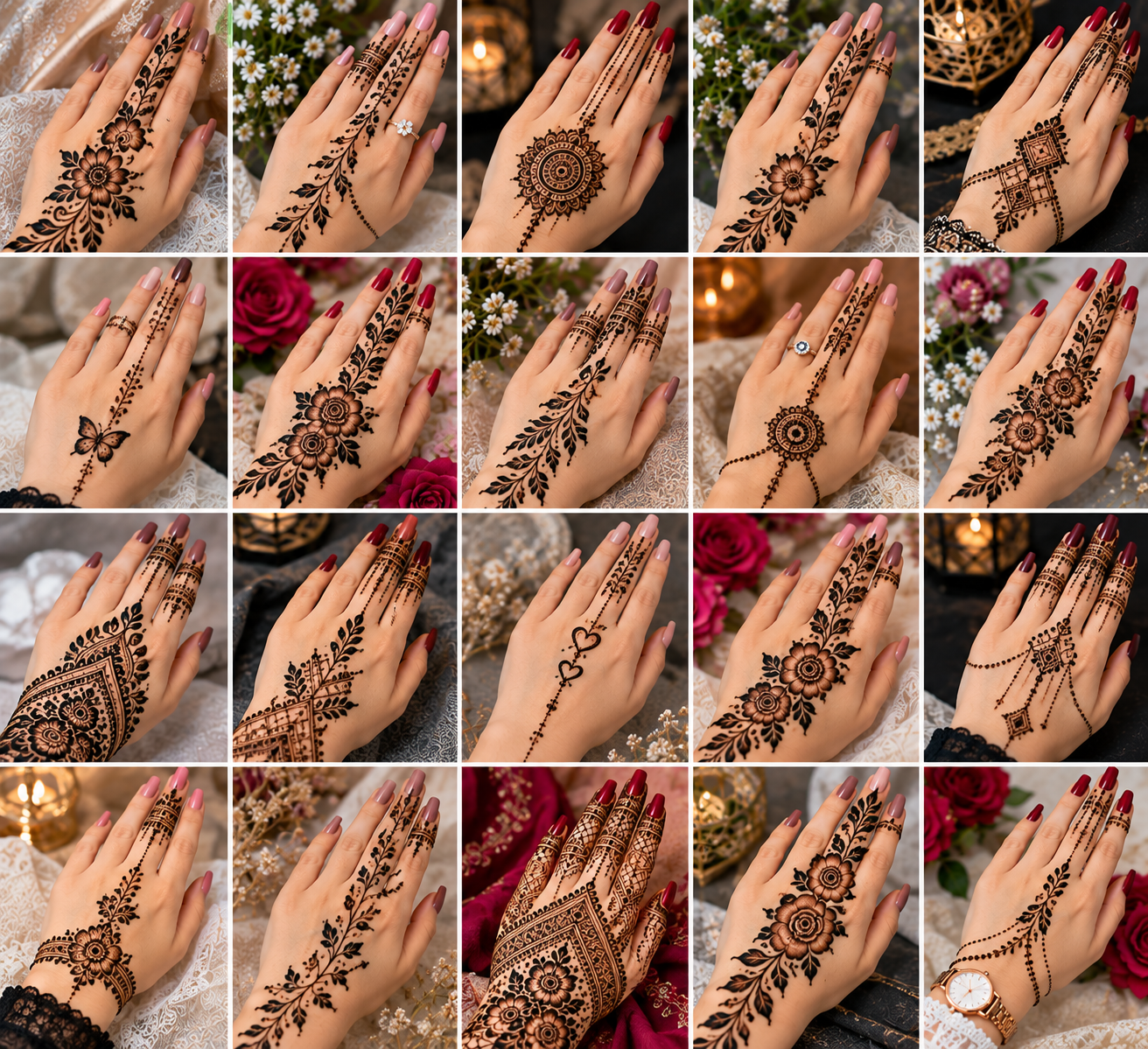
Mehndi has a way of making an ordinary moment feel special. A carefully drawn pattern on the back of the hand can complement an outfit, add character to a celebration, or simply become a form of personal expression. While traditional mehndi remains popular, modern designs have expanded far beyond a single style. Today, you can choose from delicate floral patterns, bold Arabic motifs, intricate bridal artwork, minimal lines, geometric details, and contemporary combinations that suit both casual and festive occasions.
Among these options, Back Hand Mehndi Designs are especially versatile. The back of the hand provides enough space for a design to stand out without necessarily covering every inch of skin. That makes it suitable for people who want something elegant and noticeable but still comfortable and wearable.
The best design, however, is not always the most complicated one. A beautiful mehndi pattern depends on proportion, placement, line quality, and how well the design matches the occasion. Whether you are preparing for Eid, a wedding, a family celebration, a festival, or simply want a stylish design for yourself, choosing the right pattern can make a significant difference.
Why Back Hand Mehndi Designs Remain So Popular
The back of the hand is one of the most visible areas for mehndi. Unlike designs placed mainly on the palm, back-hand patterns can be easily seen when you are taking photographs, holding a phone, wearing jewelry, or greeting someone.
Another advantage is flexibility. A small floral motif can create a refined everyday appearance, while an elaborate design can transform the hand into a detailed piece of decorative art.
| Design Style | Best For | Overall Appearance |
|---|---|---|
| Minimal | Casual days, simple gatherings | Clean and elegant |
| Arabic | Eid, parties, celebrations | Bold and flowing |
| Floral | Festivals and family events | Soft and graceful |
| Bridal | Weddings | Detailed and elaborate |
| Geometric | Modern occasions | Structured and contemporary |
| Mandala | Traditional celebrations | Balanced and symmetrical |
The choice often comes down to personality. Someone who prefers understated fashion may enjoy thin vines and small flowers, while someone who loves statement designs may prefer dense patterns extending from the fingers toward the wrist.
How to Choose the Right Mehndi Design
Choosing a design should begin with the occasion, but that is only one part of the decision. Consider your outfit, jewelry, hand shape, available time, and the level of detail you are comfortable wearing.
For example, a heavily embroidered outfit may pair nicely with a relatively open mehndi pattern. If your clothing is simple, a more detailed design can become the visual focus.
Consider the Occasion
For an everyday gathering, there is little need for an elaborate bridal pattern. A few flowers, leaves, dots, and curved lines can create a polished appearance without feeling excessive.
For Eid or another festive celebration, Arabic-inspired patterns and floral compositions are popular choices because they provide noticeable detail while leaving some negative space.
Wedding mehndi is different. Bridal designs often cover much more of the hand and may extend toward the wrist and forearm. These patterns require considerably more time and precision.
Think About Your Outfit
Mehndi works best when it complements the overall look rather than competing with it.
If you are wearing a heavily decorated dress, consider a design with controlled detailing. If your outfit is plain or has a simple silhouette, an intricate back-hand pattern can add visual interest.
Jewelry matters too. Rings and bracelets can interact beautifully with mehndi, particularly when the design leaves deliberate spaces around the jewelry areas.
Popular Back Hand Mehndi Designs
There is no single definition of a beautiful mehndi design. Different patterns create completely different moods, and understanding those differences can make choosing easier.
1. Floral Back Hand Mehndi Designs
Flowers are among the most adaptable elements in mehndi artwork. They can be drawn as large focal motifs or used as small accents throughout a composition.
A floral design may begin near the wrist and travel diagonally toward the index finger. Another approach is to place one central flower on the back of the hand and surround it with leaves, dots, and delicate curves.
Floral designs are particularly suitable when you want something feminine and graceful without making the entire hand look crowded.
2. Arabic Mehndi Designs
Arabic mehndi is known for flowing compositions, prominent flowers, leafy trails, and open spaces.
Rather than filling the hand completely, the design often follows a particular direction. This creates movement and gives the pattern a lighter visual appearance.
An Arabic back-hand design might start around the wrist, curve across the hand, and finish near one or two fingers. The open skin between motifs becomes part of the design itself.
3. Minimal Mehndi Designs
Minimal mehndi has become increasingly appealing to people who prefer simple fashion.
A minimalist pattern can consist of:
- A small flower
- A thin leafy branch
- Fine geometric lines
- Tiny dots
- A small mandala
- A bracelet-style wrist pattern
- One central motif with finger detailing
The advantage is practicality. Minimal patterns can be completed relatively quickly and are easy to coordinate with everyday clothing.
4. Mandala Mehndi Designs
Mandala patterns use a central circular structure surrounded by repeated decorative elements.
They work particularly well on the back of the hand because the central area provides enough room for symmetry. Small extensions toward the fingers or wrist can then connect the main motif to the rest of the composition.
The most important part of a mandala is balance. If the spacing between rings or decorative elements becomes inconsistent, the pattern can lose its visual harmony.
5. Bridal Back Hand Mehndi Designs
Bridal mehndi generally involves much greater detail than casual designs.
A bridal back-hand composition may include flowers, paisleys, leaves, peacocks, architectural patterns, traditional symbols, fine meshwork, and intricate finger designs.


The important consideration is consistency. When a design contains many elements, each part should feel connected to the overall composition rather than appearing like unrelated motifs placed beside one another.
Back Hand Mehndi Designs for Eid
Eid is an occasion when many people prefer designs that are festive but not necessarily as elaborate as bridal mehndi.
A balanced Eid design might combine a large flower with a leafy trail, a few decorative finger elements, and small dots around the edges. Arabic patterns are especially suitable because their flowing structure creates a noticeable result without requiring complete hand coverage.


For a modern Eid appearance, leave some negative space between the major motifs. This creates contrast and allows the pattern to remain visually clear in photographs.
Simple Back Hand Mehndi Designs for Beginners
If you are applying mehndi yourself, starting with a complicated bridal design may be frustrating. A better approach is to build the pattern from a few manageable elements.
Begin with a central flower. Add two or three leaves around it. From one side, draw a curved vine toward the wrist. Finish with dots, small petals, or simple lines.
Once you are comfortable controlling the cone, you can introduce more complicated elements such as paisleys and fine latticework.
A Simple Design Structure
Try this basic arrangement:
- Place a medium-sized flower in the center of the hand.
- Add curved leaves around two sides.
- Extend a thin vine toward the wrist.
- Add a small motif near the index finger.
- Decorate selected fingers with lines and dots.
- Leave some open skin between the major elements.
This approach is easier to control than attempting to cover the entire hand immediately.
Stylish Designs for Different Hand Shapes
Hand shape can influence how a design appears.
A long, flowing pattern can visually emphasize the length of a hand. A centrally placed circular motif can create a balanced appearance, while diagonal compositions can add movement.
For smaller hands, extremely dense patterns may make the design appear crowded. Choosing fewer, slightly larger motifs can often produce a cleaner result.
For larger hands, there is more room to experiment with layered details, extended vines, multiple flowers, and larger central motifs.
The goal is not to follow a strict rule. Mehndi is decorative art, so personal preference should always have the final say.
How to Make Your Mehndi Design Look Cleaner
A beautiful pattern depends heavily on execution. Even a simple design can look impressive when the lines are controlled.
Keep Line Thickness Consistent
Try to maintain a steady pressure on the cone. Uneven lines can make otherwise attractive patterns look messy.
Avoid Overfilling
One of the most common mistakes is assuming that more detail automatically means a better design. It does not.
Negative space helps individual motifs stand out. If every area is filled, flowers, leaves, and borders can visually merge together.
Plan Before Adding Details
Think about the overall direction of the design before filling small spaces.
For example, if your primary composition moves diagonally from the wrist toward the middle finger, supporting motifs should generally reinforce that direction.
Tips for Applying Mehndi at Home
If you are creating your own design, preparation makes the process much easier.
Start with clean, dry skin. Avoid applying heavy lotion immediately beforehand because it can interfere with the paste’s contact with the skin.
Keep your hand supported on a stable surface while drawing. This reduces accidental movement and makes fine lines easier to control.
Work from the larger elements toward the smaller ones. Draw the main flower or central motif first, then add vines, leaves, borders, and tiny decorative details.
Give the design enough time to dry before touching or smudging it.
After the paste has dried and been removed, the stain will generally deepen over time before gradually fading. The exact result can vary depending on the paste, skin, application, and aftercare.
Mehndi Design Ideas for Special Occasions
Different occasions call for different levels of decoration.
| Occasion | Recommended Style | Design Direction |
|---|---|---|
| Eid | Arabic or floral | Elegant and moderately detailed |
| Wedding | Bridal | Dense and intricate |
| Engagement | Floral or mandala | Refined and decorative |
| Party | Modern Arabic | Stylish with negative space |
| Family Event | Traditional floral | Balanced and graceful |
| Casual Wear | Minimal | Small and quick |
| Festival | Traditional or contemporary | Decorative and expressive |
This does not mean you have to follow these categories strictly. A minimal bridal-inspired pattern may suit someone who dislikes heavy designs, while a detailed floral design can work perfectly for a casual celebration.
Modern Trends in Back Hand Mehndi Designs
Contemporary mehndi increasingly combines traditional motifs with simpler compositions.
One noticeable approach is the use of oversized flowers surrounded by plenty of open space. Another is the combination of geometric shapes with traditional leaves and petals.
Some designs also treat the fingers as separate decorative elements rather than extending one continuous pattern across the entire hand.


These modern approaches work particularly well for people who want something traditional enough to feel familiar but contemporary enough to suit modern fashion.
How to Pick a Design From a Photo
When choosing from reference pictures, do not simply select the design that looks most impressive on someone else’s hand.
Instead, examine its structure.
Ask yourself:
- Is the pattern suitable for the size of my hand?
- Do I want heavy coverage or open space?
- Can I realistically draw this design?
- Does it complement my outfit?
- How much time do I have?
- Do I prefer floral, geometric, Arabic, or traditional motifs?
You can also combine elements from multiple references. For example, take the central flower from one design, the finger pattern from another, and the wrist composition from a third. Creating a personalized arrangement often produces a more distinctive result than copying one complete pattern.
Common Mistakes to Avoid
A few mistakes can reduce the visual quality of even a carefully planned design.
Using too many unrelated motifs: A design should have visual flow.
Ignoring proportions: A tiny flower surrounded by oversized decorations may look unbalanced.
Filling every empty space: Negative space is useful and should not automatically be treated as unfinished work.
Rushing fine details: Small lines require control. Adding them too quickly can make the design look uneven.
Choosing complexity over suitability: The most detailed design is not necessarily the best design for your occasion.
How to Create Your Own Mehndi Style
Developing a personal style takes practice, but it can be surprisingly enjoyable.
Start by practicing individual components rather than complete hands. Draw flowers repeatedly until you can produce them consistently. Do the same with leaves, paisleys, vines, dots, and borders.
Then combine two elements at a time.
For example:
Flower + leaves → simple floral motif
Flower + vine → flowing Arabic pattern
Mandala + finger details → structured traditional design
Paisley + floral elements → richer decorative composition
After you become comfortable, experiment with spacing and composition. This is where a collection of individual motifs becomes an actual design.
Caring for Mehndi After Application
Once your design is finished, avoid disturbing the paste while it is drying. Smearing a section can affect the sharpness of nearby details.
After the dried paste is removed, gentle aftercare can help preserve the appearance of the stain. Avoid unnecessary washing immediately after application, particularly if you want the color to continue developing.
Remember that mehndi stains naturally fade as the outer layer of skin sheds. Hands are frequently washed and used throughout the day, so hand designs may fade differently from designs placed on less frequently washed areas.
Conclusion
Mehndi is more than a decorative pattern placed on the skin. The design, placement, level of detail, and overall composition can reflect personal taste while adding something distinctive to an occasion. Back Hand Mehndi Designs are especially adaptable because they can be minimal and elegant, richly traditional, or completely modern depending on how the motifs are arranged.
If you are choosing a design for Eid, a wedding, an engagement, a party, or simply for everyday enjoyment, focus on what suits you rather than choosing complexity for its own sake. A clean floral vine, a balanced mandala, or an open Arabic composition can be just as striking as an elaborate pattern.
The strongest designs usually have one thing in common: every element has a purpose. Flowers create focus, leaves provide movement, borders add structure, and empty spaces give the artwork room to breathe. Once you understand that balance, choosing—and even creating—beautiful mehndi designs becomes much easier.